Posts

Showing posts with the label electronic waste

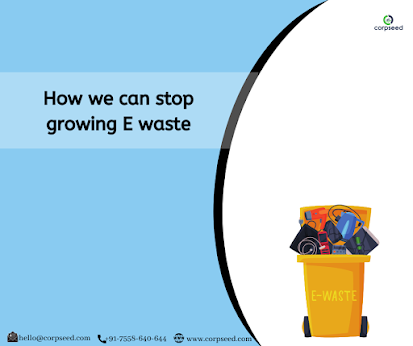
How we can stop growing E waste- Corpseed
Image
  Electronic waste or e-waste is created when electronic and electrical equipment becomes useless for their intended use or have crossed the expiry date. Computers, mainframes, servers, monitors, compact discs (CDs), printers, calculators, scanners, copiers, fax machines, battery cells, cellular phones, transceivers, TVs, iPods, medical apparatus, washing machines, refrigerators, and air conditioners are examples of e-waste (when unfit for use). These electronic equipment types get fast replaced with newer models due to the rapid technological advancements and more modern electronic equipment production. This has led to an exponential expansion in e-waste generation. People manage to switch over to the newer models, and the life of products has also reduced. E-waste typically consists of plastics, metals, cathode ray tubes (CRTs), printed circuit boards, cables, and so on. Valuable metals such as copper, gold, silver, and platinum could be obtained from e-waste if carefully proce...

The Benefit Of E-Waste Management And Disposal, For Environment

Image
  This article applies to consumer and business electronic equipment that is expected or at the edge of its useful life. There is no clear description for electronic waste (e-waste) at this time, but if you can fill it into an electrical outlet or it includes circuit boards or chips, it is most likely e-waste. These outputs can contain heavy metals like cadmium, copper, lead, and chromium that can pollute the environment. DO NOT dispose of these items in the trash or your recycling bins. Examples of electronic waste include, but not limited to: TVs, printers, computer monitors, lamps, scanners, mice, cables, keyboards, circuit boards, digital/video cameras, clocks, flashlight, calculators, phones, answering machines, radios, VCRs, DVD players, MP3, and CD players   Kitchen equipment (toasters, microwave ovens, coffee makers)   Laboratory equipment (microscopes, hot plates, calorimeters)   Television tubes (CRTs...

E-Waste Recycling: Effect on Environment- Corpseed

Image
  E-waste or electronic waste is a rejected product that still works, has a battery, or something that you can stop into an electrical socket. Smartphones, laptops, radios, computer parts, televisions, electric kettles, and washing machines are just a few models of  electronic waste . We require the latest and most extensive electronic technology, but what concerning the thousands of obsolete gadgets released each year? The startling rate of e-waste generation People have multiple outdated and old electronics in their homes. In ordinary, there are around 80 electronic products per household. In the UK, people consume around £ 800 every year on unique models and devices. The same households distribute between 44 and 55 pounds of electronic waste per year. These rejected things end up in the landfill or neglected area, the garage, or the attic. The University of the United Nations published that the amount of electronic waste has developed by about 8% in just t...